In a highly competitive real estate market, the ability to efficiently capture leads, nurture them and then turn them into leads is the key difference between top performers and everyone else. Leads are the vitality of any real estate business. But, they are usually volatile, time sensitive and scattered across a variety of platforms. The Customer Relationship Manager (CRM), a software solution that addresses these issues transforms an overwhelming flow of inquiries to a structured strategic process. It goes beyond simple contact management to create an intelligent system of prioritization. Personalization. and automated. CRMs are more than an organization tool. They're strategic weapons that assist realtors to achieve their goals. The following 10 points outline how a specialized CRM directly improves lead management, allowing agents to react faster, engage smarter, and make more deals even in the most crowded market.
1. Centralizes Lead Sources on a Single Database
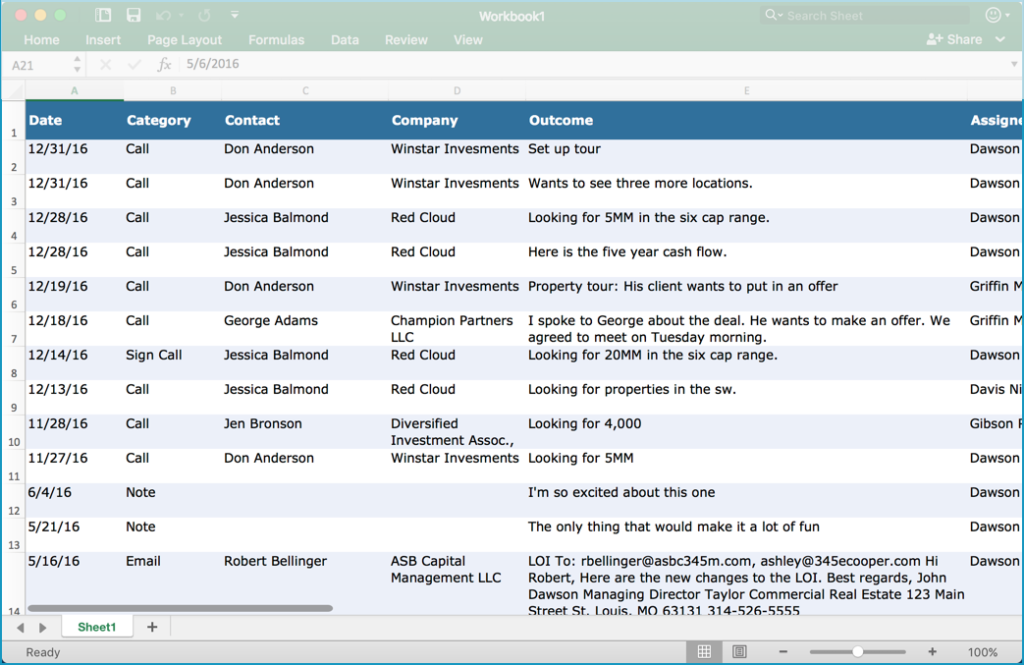
A realtor's leads are sourced from a myriad of sources, including Zillow, Realtor.com, personal website forms, open houses, social media and personal referrals. Without a CRM that is effective, managing leads is a mess of text messages, emails, scribbled down notes, and various dashboards. A CRM is a central hub that funnels all leads, regardless of their origin, into one searchable database. This decreases the risk of leads "falling in the cracks" or being buried in an email inbox that is cluttered.
2. Automates and permits immediate follow-up
Speed of lead generation may be the most important conversion aspect. According to research, getting in touch with a lead within a few minutes boosts engagement. A CRM automates that crucial first contact. It can be configured to send an invitation email or text whenever a prospective customer fills out the form on the internet. This instant response that cannot be maintained with a single hand signals professionalism, eagerness to assist and sets the agency different from the competition.
3. Uses Intelligent Scores and Priorities
There aren't all leads in the same way. A rookie agent may waste hours trying to find a casual browser while a buyer looking to buy is turned off. Lead scoring is a data-driven method of introducing intelligence into CRM software. Leads are automatically scored by their behavior (e.g. looking at valuable listings or frequent web visits) and explicit information (e.g. budget, timeline, from a form) as well as engagement level and other factors. This results in a ranked list where the hottest most qualified leads are brought at the top. The priority of leads will ensure that the realtor's limited energy and time is devoted to those prospects with the best likelihood of completing.
4. Drip campaigns allow you to nurture leads in a systematic manner
Most leads in real estate aren't ready to buy right away. Nurturing these long-term prospects is crucial to build an effective pipeline. A CRM automates nurturing through emails and SMS drip-campaigns. A new lead is automatically enrolled into an automated sequence that delivers important content such as neighborhood guides, home maintenance advice, or market analysis over weeks or month. This "set-it-and-forget-it" system keeps the agent top-of-mind, builds trust, and ensures the lead is warmly nurtured until they are ready to activate.
5. Tracks All Interactions for Personalized Communication
Personalization is essential in a market that is competitive. CRMs record every single interaction with a lead--every email received and sent and every phone call (with notes of the topic discussed) and every text message, and every property viewed. The agent can access all of the information prior to each contact. This allows them to refer back to prior communication ("How did your soccer match for your son go?"). They can also refer to past conversations ("How was your son's play of soccer?") This level of personal attention makes leads feel valued and appreciated, creating the possibility of a deeper connection.
6. Facilitates Behavioral Trigger-Based Marketing
Advanced CRMs go above drip campaigns to deliver relevant, timely communications. If a user repeatedly visits an item and the CRM sends an email with similar details and/or listings. If they decide to save a certain property, and its price drops, then their system can immediately notify them. This proactive marketing show that the agent pays attention to the leads' individual needs and acts proactively on their behalf. The engagement and conversion rates are significantly increased.
7. Segment Audiences, Target Messaging and Targeted Advertising
A one-size-fits-all approach to communication is not effective. CRMs enable realtors separate leads' databases based on various factors, including the buyer's or seller's location, geographical location or price point. This allows extremely specific marketing. An agent could send an invitation to a seminar for "first-time buyers" to only this segment, or a luxury market update to only leads who are interested in high-end property. The messages that are targeted are more valuable, get higher engagement and position the agent in a specialist role.
8. An image pipeline is available to monitor progress.
A visual sales procedure, such as Kanban, for example Kanban can transform an the management of leads from an abstract concept to a manageable and tangible one. Leads are moved through different stages, including "New Lead,""Contacted, "Appointment set," "Negotiation," or "Closed." This gives the realtor an instant overview of their entire business performance: how many leads are coming in, where bottlenecks are developing and how many sales are nearing the finish line. This is an excellent tool to plan workflows and managing the workload.
9. It seamlessly integrates into prospecting tools
Agents should be actively seeking out leads to build their lead database. A CRM that is powerful can be integrated with other tools like Mojo or Cole Realty Data to allow for the seamless import of leads that are for sale by owner (FSBO) as well as expired listings. These leads can be instantly incorporated into a drip campaign that is designed to convert these leads into clients. This integration provides an efficient, seamless process, from prospecting to the nurturing. This maximizes the agent's efforts.
10. Data-driven insights that can be used for ROI analysis
In the end, a CRM transforms lead management by providing robust analytics. It is able to create reports that reveal which lead sources generate the most closed transactions and the most valuable transactions. This helps realtors move beyond the arbitrary metrics (like total amount of leads) and make more informed choices on where to put in their marketing budget. Agents who focus on channels that provide the best ROI can boost their profit and gain a competitive edge by maximizing their lead generation. Take a look at the best go here about best crm for real estate for site advice including sales crm programs, best real estate crm, crm and marketing, crm management, crm for small companies, best crm management, marketing automation tools, crm program free, pipeline crm, crm programs for realtors and more.

Top 10 Crm Implementation Challenges For Realtors And Ways To Overcome Them
Any real estate professional should think about adopting a CRM (Customer Relationship Management) system. However, the path to adoption can be difficult. The promise of improved processes and increased sales are not always fulfilled by CRM-related initiatives. They usually fail because of common, but solvable difficulties. Most of these challenges have nothing to do with technology but more to do with people's behavior processes, management of processes and strategic planning. In addition to internal conflict and chaos within the data, there are issues with training and a lack of clarity in goal setting. For realtors, these issues can cost a lot of money and result in an under-used platform. Being aware of these issues in advance is the first step to mitigating the impact. Brokers and agents who take an approach of strategic and proactive can successfully navigate the process of implementation and turn potential roadblocks into stepping stones for an efficient, organized and profitable business. The following 10 items outline the most frequently faced problems that arise when implementing CRM and offer specific, concrete strategies for overcoming these.
1. Low user adoption and resistance to changes
Problem: Often, the biggest obstacle to overcome is the human factor. Agents have a tendency of settling for familiar, though inefficient, methods. (Such as spreadsheets or sticky notes) They might not want to move to a more complex and sophisticated system. This can result in lower user acceptance, especially when the CRM has been purchased but is not used.
In order to succeed, the leadership team must encourage change through clearly explaining the"why" of CRM. Agents must be a part of the process of selecting users. This will help to build buy-in. Start with a few enthusiastic users and create success stories. It is crucial to provide ongoing training that is tailored to the role of each user and show the benefits of CRM including how it can directly reduce time and money.
2. Data migration and low data quality
Problem: Many agents attempt to incorporate years' worth of data that is not organized, from different sources, into their CRM. This includes old emails or spreadsheets, or even scribbled-down notes. This "garbage-in, garbage-out" method causes chaos from the very beginning, causing doubt among users and causing CRM to appear ineffective.
To overcome it, set aside time for a thorough data cleanup prior to the migration. Standardize formats, eliminate duplicates, and update old information. You can consider a phased change, starting only with the active leads or Sphere of Influence, and leaving the old, cold data to the side. A clean, accurate database is an asset. One that is messy can be a liability.
3. Afficient and one-time-only training
Problem: Many brokers make the fatal mistake of providing just one training session during launch and then expecting agents to be proficient. Real estate can be difficult work. If there is no ongoing support, agents will quickly forget what they've learned. They could also get annoyed and fall back into the old routines.
Overcoming It: Implement a multi-phase training program. Begin by offering "how-to' sessions. After the users have become comfortable with the basic functions it is possible to continue with a more advanced training session within a couple of weeks. Provide team leader training instead of the specific training for agents. Create a searchable library of video tutorials that are concise and geared towards specific duties.
4. There is no clear process and a uniform Workflow
Challenge: CRMs are tools for executing processes, they're not the processes themselves. The system will be used by different agents if no workflows have been established. There is no standardization in how to manage new leads, handle transactions, or follow up with customers who have already been referred to, leading to inconsistent information and unproductive uses.
Before going live with a new workflow, record it and share the news. Make a clear, written procedure: "When Zillow leads are received, step #1 is X; step #2 is"Y." These steps can be created within the CRM using the help of automation and a task template. This ensures consistency, and the CRM is the unmistakable route for all business processes.
5. Overwhelming Complexity and Feature Bloat
Problem: In the effort to select the "best", team members can choose a CRM which has hundreds features. A complicated interface or features that aren't understood can overwhelm and paralyze agents and cause them to quit their tasks.
To overcome it, adopt a "crawl or walk, run" approach. During the first training, only focus on the most important features: adding an account, logging a task, and using your mobile app. After mastering these features, introduce advanced features such as automation and reporting. Dashboards can be customized so that they only display only the most pertinent data.
6. Inability to incorporate into daily routines
The challenge is that the business views the CRM as an autonomous tool rather than a central hub. Agents continue to use their personal email and notes and updating the CRM on a sporadic basis, which makes it undependable.
Overcoming This: Mandate that CRM be the sole and only source of Truth. Make it a requirement that all communications with clients be logged. Make CRM the homepage of every agent's browser. Make it the first thing to do in the day and as the final task of the day. When it is integrated into daily routines it becomes an essential habit.
7. Insane expectations and a lack of patience
Problem: Some people are expecting the CRM system to create new business right away. If they don't get immediate results, they give up and leave. They don't realize that the ROI is realized over time through consistent use and improved efficiency.
Set realistic expectations and a progressive pace starting from the beginning. Communication: The first 1-3 months are dedicated to learning, migration, and the implementation. The following quarters, ROI is expected to be achieved through greater lead conversions, better time-savings and stronger customer relations. Celebrate small victories and early wins to keep momentum.
8. Ignoring Mobile Functionality
The challenge: Real estate is a profession that requires mobility, yet a CRM with an ineffective mobile application is destined to fail. If agents aren't able to get information from their phones and make calls following a showing or review their work and tasks, they might not be able to use it at the time they need it.
Prioritize the mobile accessibility in the CRM selection process. Mobile apps should be a key element of the training. Explain key field-based functions, like click-to-call, voice-to text feedback, or sending documents directly to e-signatures from the phone.
9. Insistency on Ongoing Support and internal champions
The challenge is that agents are bound to be able to answer questions following the initial rollout. Without a support system that's readily available, frustration will increase and use will decrease. The broker is not the only person who can help with questions.
Overcoming It: Identify and empower "CRM Champions"--tech-savvy agents or staff who receive advanced training. These are the first to answer frequent queries. Set up a support channel for CRM (e.g. shared inbox on Slack) and encourage a collaborative workplace.
10. No Accountability
Problem: Implementation is seen as a one-time task without a long-term plan. There is no way to assess if agents are using their CRM correctly or not at all. Lack of accountability could lead to a decline in the rate of adoption.
Leadership must utilize the reports in CRM to track implementation. Report on the frequency of logins by users as well as task completions and activities logging. Set up regular meetings with the team to discuss the pipeline in CRM. This increases accountability and makes CRM a mandatory component of the business process. Follow the best best crm for real estate for more examples including marketing for real estate companies, crm for marketing automation, crm system, crm system meaning, marketing crm, real estate crm programs, real estate crm software, best real estate crm, real estate leads, marketing automation software and more.